James Hardie Junior ADU Conversion: The Orange County Owner’s Guide
We stock and install James Hardie-compatible siding, trim, and exterior components for junior ADU conversions across Orange County, with typical installed costs running $2,800 to $7,400 depending on wall area, product line, and what failed. Most owners discover the problem when HardiePlank lap siding starts showing hairline cracks near the bottom edge, or when HardieTrim boards swell and pull away from corners after a couple of wet winters. You’re probably here because a contractor or a home inspector pointed at a wall and said the words “siding failure,” and now you need to know what it costs and who fixes it right. That’s the page we’re writing for.
Fielding ADU Orange County is an independent service provider, not affiliated with James Hardie. We work with their products every week because they’re what Orange County ADUs are built with, and because a failed exterior on a junior unit turns a rental asset into a liability fast.
Which James Hardie Models This Applies To
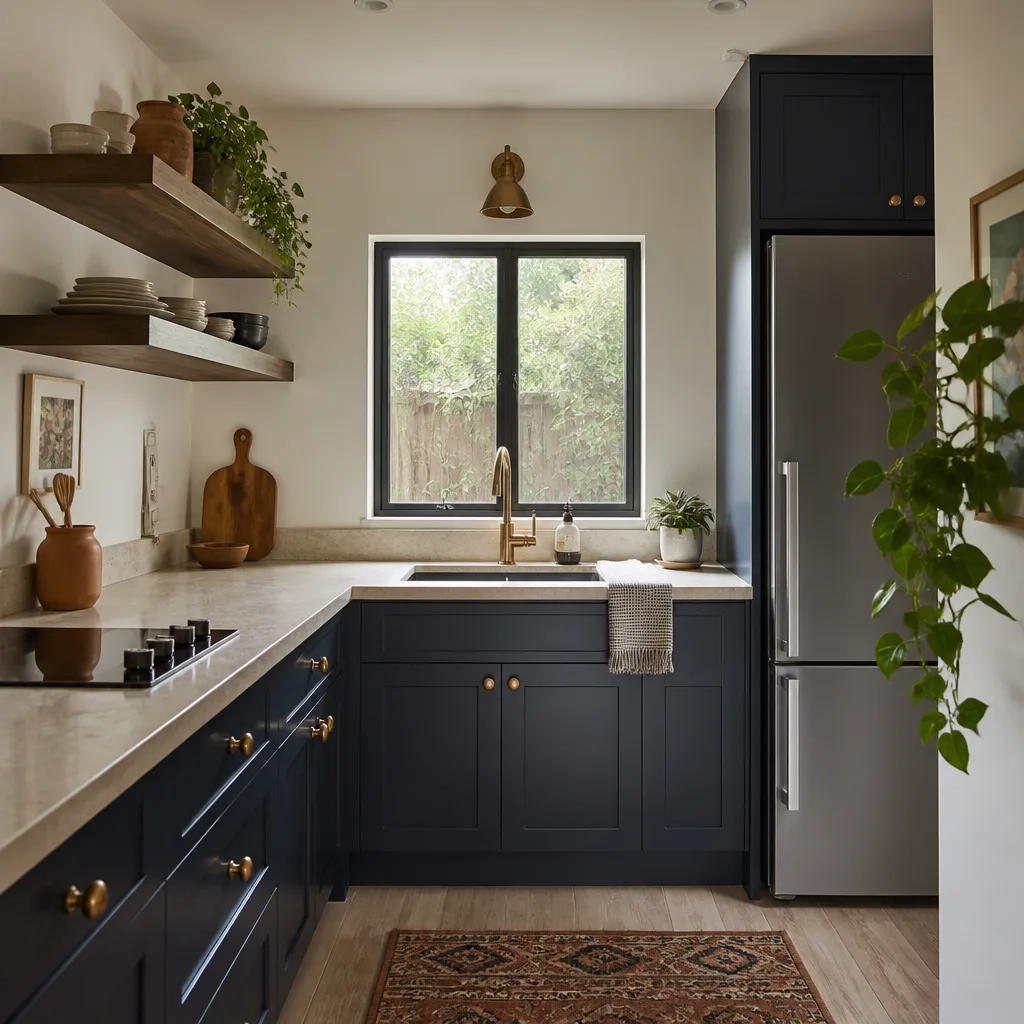
The junior ADU conversions we service in Orange County fall into two build types: attached conversions (garage, bonus room, or storage space turned into a living unit) and detached prefab or conventional units. Both use James Hardie siding and trim in predictable patterns, and the failure points are consistent across the HardiePlank, HardiePanel, and HardieTrim product lines.
Here’s the compatibility gotcha most owners hit: HardiePlank lap siding comes in 5.25-inch and 8.25-inch exposures, and the color-plus finish (the factory-applied ColorPlus Technology coating) is not the same as the primed version a painter coats on site. If your junior ADU was built with primed HardiePlank and painted afterward, a patch or replacement board matched to the original paint will show a slight texture difference at the seam unless the whole wall gets repainted. If it was built with ColorPlus boards, the color code is printed on the back of each board and on the original order sheet, usually in a format like “JH10-XXXX.” Tell us that code and we can match the board exactly. If you don’t have it, we pull a sample and match it through James Hardie’s current Orange County color palette.
HardieTrim boards fail differently than lap siding. The most common size on junior ADUs in Orange County is the 1×4 smooth trim, but 1×6 and 5/4 trim show up on craftsman-style corners and window surrounds. Measure the exposed face of the trim board before you call. Telling us “it’s the wide one at the corner” doesn’t narrow it down enough; telling us “1×6, smooth, painted white” gets us close on the first call.
On the OEM vs aftermarket question: we install genuine James Hardie product on any wall where the failed board is part of a fire-rated or shear-rated assembly, which covers most attached junior ADU conversions in Orange County. The products are engineered for specific exposure ratings, fastener schedules, and wind-load performance that aftermarket fiber-cement boards don’t always match. For detached units with simpler wall assemblies, a quality aftermarket fiber-cement board can work, but the price difference in Orange County is usually under $400 on a typical repair, and we’d rather put the product the structure was designed around back on the wall.
Signs Your James Hardie Junior ADU Conversion Is Failing
- Hairline cracks running vertically through lap boards near the bottom course. This is almost always moisture wicking up from grade or from a sprinkler head hitting the wall. James Hardie product handles moisture, but constant direct spray saturates the boards, they expand and contract, and the bottom edge cracks first.
- Trim boards swelling at the joints and corners, with visible gaps opening at the miter. Water got behind the trim because the original installer didn’t flash the corner or butt joint correctly. The board absorbs it, swells, and the caulk line fails. This is the single most common James Hardie failure we see on Orange County junior ADU conversions.
- Paint peeling in sheets from the bottom half of the wall. If it’s a primed HardiePlank installation, the painter may have top-coated before the primer fully cured, or used an incompatible paint. Once the bond fails, moisture gets between the paint film and the board, and it peels in long strips.
- Dark staining or what looks like mildew spreading up from the foundation line. This is usually not a Hardie product failure. It’s a clearance problem: the siding was installed too close to grade, or a planter bed was added against the wall after construction. James Hardie recommends a minimum 6-inch clearance between siding and grade in most Orange County conditions, and we regularly see walls with 1 to 2 inches.
- You can press on a board and feel movement or hear a soft click. Fastener failure. Either the original installer used the wrong nail type, over-drove the fasteners, or missed the stud. Every clicking board is a board that wind can eventually peel off the wall.
Replacement Cost & What’s Included
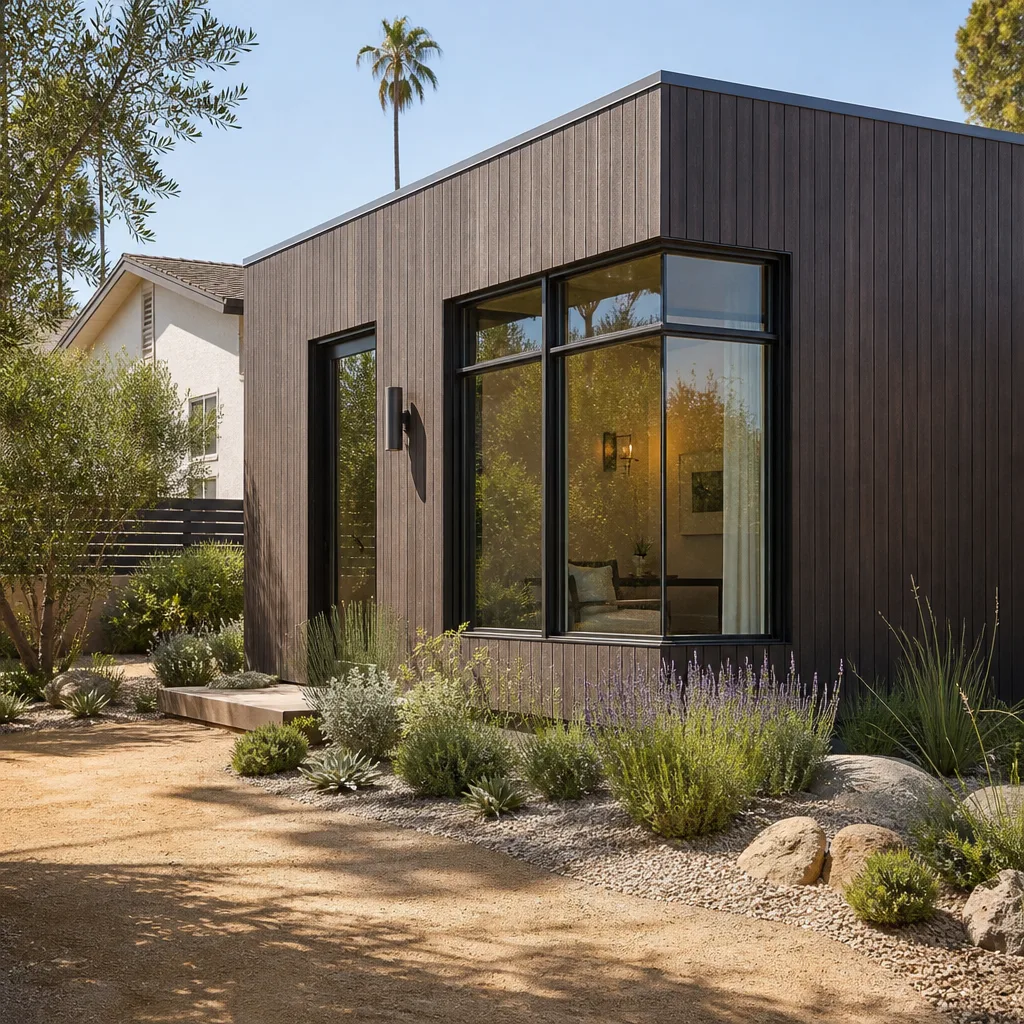
For a typical junior ADU conversion in Orange County, a siding or trim repair runs $2,800 to $7,400 installed. Here’s what drives that range:
- Scope of the wall area. A single failed trim corner with two boards runs toward the low end. Replacing the bottom two courses of lap siding on a 400-square-foot unit pushes toward the middle. Re-siding an entire wall runs toward the top.
- Product line. ColorPlus HardiePlank costs more per board than primed, and the factory color match means ordering from current Orange County stock or matching to the existing code.
- What’s behind the board. If water got in and the sheathing or framing is soft, the repair scope changes. We write a change order with a new price before touching it; we do not open a wall and then hand you a surprise.
- Access. Ladder work on a one-story unit is quick. Scaffold work on a two-story wall or a unit built tight to the property line adds labor.
Every estimate is a written line-item price. The number you approve before we start is the number on the final invoice. The Garrison Standard covers our workmanship for a full year; if something fails within that period, we come back and correct it at no charge.
DIY or Call Us?
Fiber-cement siding is not a dangerous product to work with in the way that, say, a garage door spring is. The real risk is doing a repair wrong and creating a bigger problem: cutting a HardiePlank board without proper dust control releases silica dust, nailing a replacement board with the wrong fastener pattern voids the wind-load performance, and flashing a trim corner wrong means you’re doing the same repair again in two winters.
What an owner can safely do: photograph the damage, measure the exposed board faces, and check the back of any removed board for a color code. That information makes your estimate faster and more accurate. What you should not do: open up a wall on an attached junior ADU conversion, because Orange County requires the exterior assembly to maintain fire-resistance and shear performance, and the building department will want to see a permit for structural repairs. If you’re not sure whether you’re looking at a surface repair or a structural one, call us at (424) 577-4306. We’ll tell you over the phone whether this needs a permit, and we’ll put the scope in writing before anything gets touched.
FAQs
James Hardie siding and trim carry a 30-year limited, non-prorated transferable warranty on the product itself, and in Orange County’s climate, properly installed product routinely lasts 25 to 35 years before replacement. What fails first is almost never the product; it’s the installation details: flashing, clearance to grade, fastener pattern, and paint adhesion. A wall with correct clearances and properly flashed corners will outlast the unit’s first two roofs.
Yes, in most cases. A single damaged HardiePlank board can be cut out and replaced with a matching board, and a failed trim corner can be rebuilt without touching the rest of the wall. The limitation is texture and color matching: on a painted primed installation, a patch board will show a slight seam difference unless the wall gets repainted. We’ll tell you honestly before you choose which way to go. Call (424) 577-4306 and we’ll walk through your options.
A typical single-wall repair on a junior ADU conversion in Orange County takes one to two working days on site. A full re-side with trim replacement can run three to five days, plus any paint cure time if we’re top-coating primed product. We’ll give you a written schedule with the written price, and we don’t move the finish date unless weather or an open permit inspection forces it.
We stock common Orange County-size HardiePlank lap boards, HardiePanel sheets, and 1×4 and 1×6 HardieTrim on our trucks, primed and the most common ColorPlus colors. Odd sizes, special colors, and 5/4 trim typically take 3 to 5 business days from our Orange County supplier. If you can get us the color code from the back of an existing board before we arrive, we can usually bring the exact match on the first visit.
We do. We’re fluent with the major prefab and modular ADU platforms, including Abodu, Cover, and Dvele, plus Mighty Buildings, Boxabl, and Plant Prefab. The exterior cladding systems on these units vary by manufacturer and model year, and the repair approach depends on how the panels integrate with the James Hardie or comparable cladding. We’ll match the right repair method to the unit you actually have.
If your James Hardie exterior is failing and you want a written price, not a handshake and a maybe, call us at (424) 577-4306. Reed Calloway and the crew at Fielding ADU Orange County have been working Orange County ADUs for years, from garage conversions in Tustin to detached units backing up to the Peters Canyon trail. Scope in writing. Price in writing. Then we build.
Written by Reed Calloway, Owner, Fielding ADU Orange County at Fielding ADU Orange County, serving Orange County and nearby areas.