Permit Application in Orange County, CA
Permit application is the paper-and-plan step between your ADU design and the day a city inspector signs off on the work. At Fielding ADU Orange County, we prepare, submit, and manage the permit package for accessory dwelling units, garage conversions, and room additions across Orange County, so you’re not guessing at city requirements or standing at a planning counter. If you’re ready to build, call us at (424) 577-4306 and we’ll tell you exactly what your project needs to get through permitting.
We handle permit application as part of our broader ADU Design & Permitting in Orange County work. That means the person who draws your plans is the same team that walks them through the city, which cuts down on the back-and-forth that stalls most projects. Reed Calloway leads this work personally, and he’s sat in enough planning departments from Anaheim to San Clemente to know which cities want extra drainage studies, which ones flag tree-protection rules, and which ones actually move fast.
Our home page has more on how Fielding ADU Builders operates, but the short version is this: written price before work starts, every permit pulled by the book, and a one-year written guarantee when the build is done.
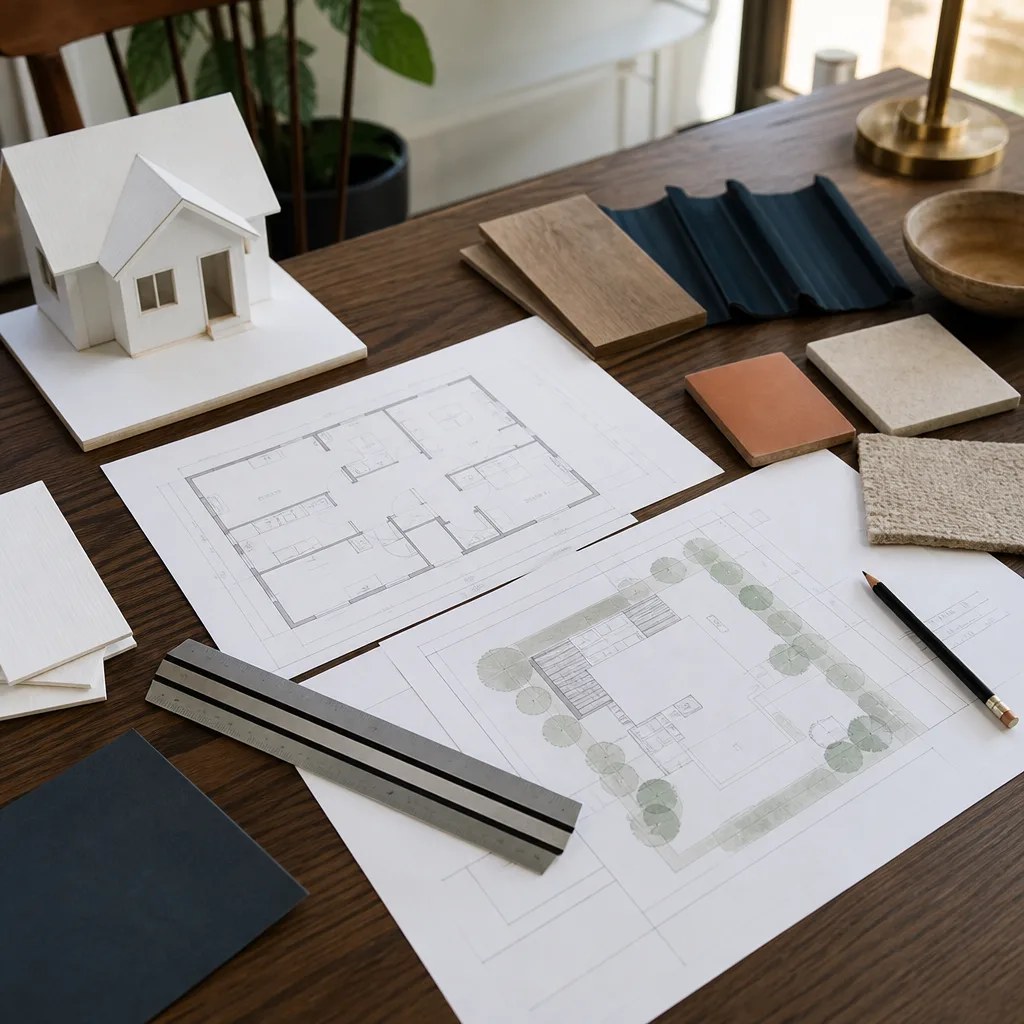
When You Need Permit Application
Not every project needs a full permit package, but most ADUs and additions in Orange County do. Here’s when you’re in permit-application territory:
- Your city requires a permit for any detached structure over 120 square feet. Most standalone ADUs pass that threshold quickly. Even if the structure is prefab, the permit still has to be pulled by someone who knows the local code.
- You’re converting a garage into living space. Garage conversions in cities like Huntington Beach, Irvine, and Fullerton trigger electrical, plumbing, and insulation reviews. The permit package has to show how the space meets current building and energy codes, not the code from when the house was built.
- You’re adding square footage to your existing home. Room additions change the footprint, which means setback checks, lot-coverage calculations, and a fresh look at how the new roofline ties into the old one. The city wants to see all of that drawn and stamped before you pour a single footing.
- Your project touches electrical, gas, or sewer lines. Even a small ADU with a kitchenette and bathroom means new circuits, a gas stub, and a sewer connection. Each of those triggers its own review inside the permit application.
- You’ve been told you need a setback variance. A setback variance is the city’s written permission to build closer to the property line than the standard rule allows. Getting one means a formal application, neighbor notification, and often a planning commission hearing. We prepare that paperwork.
- You bought a prefab or modular ADU and the manufacturer won’t handle local permitting. Platforms like Abodu, Cover, and Dvele build excellent units, but the local permit still falls on the homeowner. We’ve worked with all three, so we know what their engineering packages include and what Orange County cities still need from you.
Our Permit Application Process
Here’s how it works, step by step. We keep it plain because the process is plain when someone who knows the codes runs it.
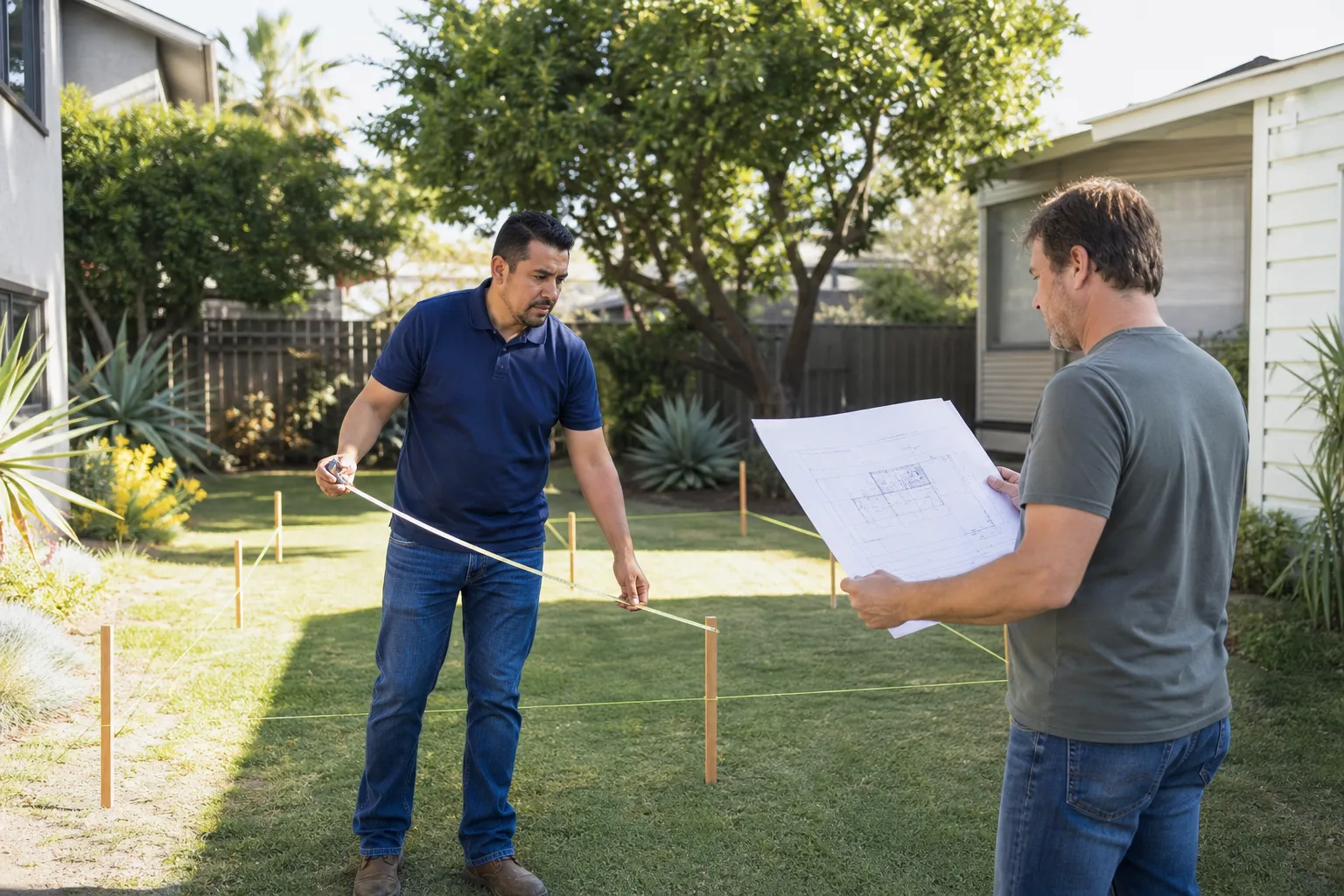
- Site review and city check. We start by looking at your address, lot size, and the specific city or unincorporated area you’re in. Orange County has 34 cities plus county-governed pockets, and each one has its own fee schedule and submittal quirks. We tell you up front which rules apply to your property.
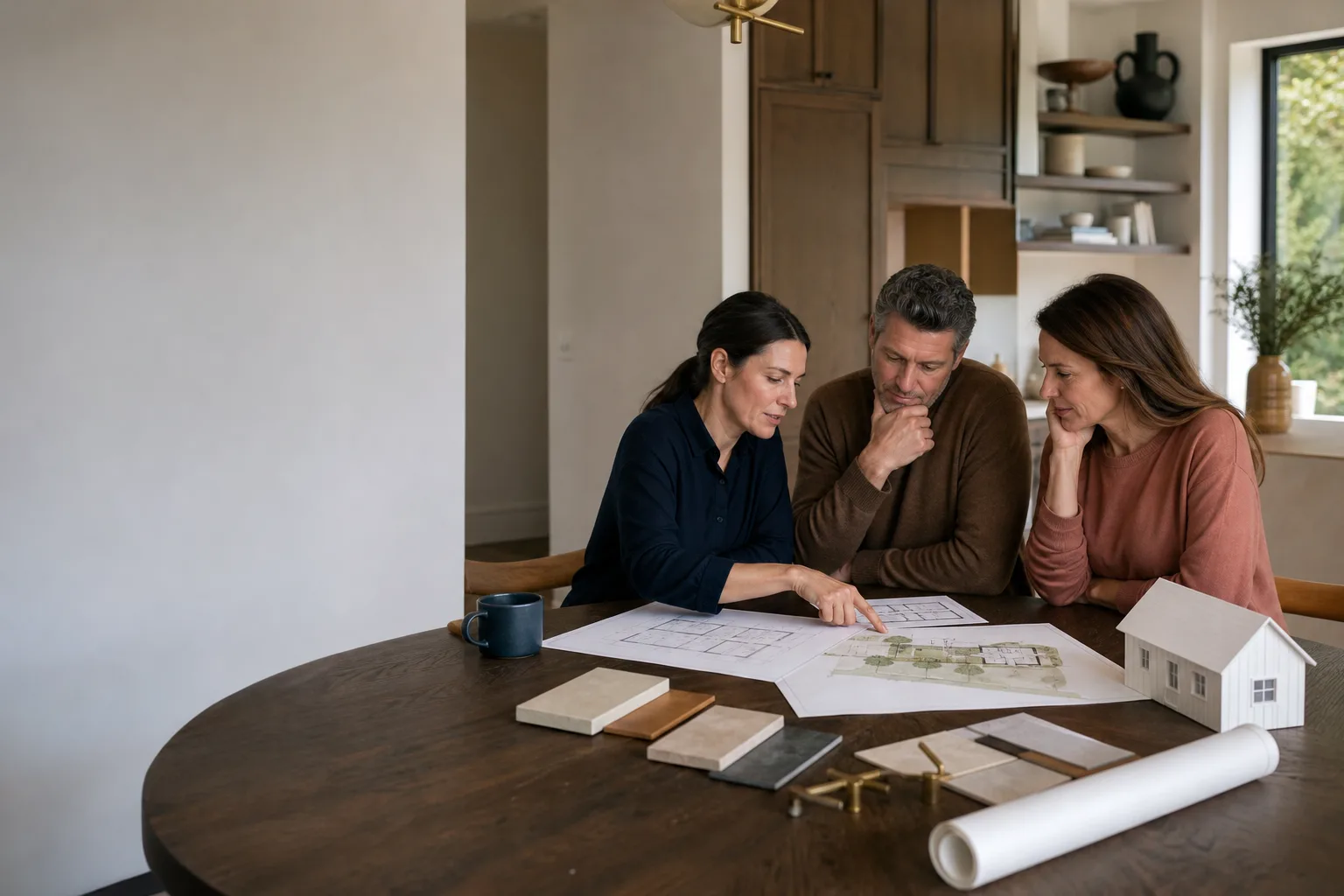
- Plans and drawings. If you have plans, we review them for completeness before submitting. If you don’t, we draw them. Either way, the drawings have to show site layout, floor plan, elevations, electrical, plumbing, and structural details. Incomplete plans are the number-one reason permit applications sit on a plan checker’s desk for weeks.
- Documentation and applications. We prepare the permit application forms, the owner-builder affidavit if you’re acting as your own builder, the energy-compliance documents (Title 24), the stormwater plan for lots over a certain size, and any HOA sign-off letters your project needs. Each document goes into the package in the order the city expects to see it.
- Submittal and plan-check management. We submit the package and then track it through plan check. When the plan reviewer sends back comments, we answer them. Most first-round submittals come back with a correction list anywhere from two to fifteen items. Our job is to clear that list quickly so you’re not waiting on us.
- Permit issuance and fee payment. Once the city approves the plans, we coordinate the permit-fee payment and get the permit issued in your name. We tell you exactly what the city charges before you write the check. No surprise line items at the end.
- Inspection support through final sign-off. We stay involved after the permit is issued. If the inspector notes a correction during construction, we advise on the fix so the project stays on track toward final approval and a closed permit record. A closed permit is the finish line. An open one can cause problems when you sell the house.
Permit Application Pricing in Orange County
Permit application costs in Orange County split into two buckets: city fees and our work. City fees are set by ordinance and don’t change from one contractor to the next. Our fee depends on what we’re doing for you: plan review only, full plan preparation and submittal, or full management through final inspection.
Here’s what you can expect to pay, based on projects we’ve permitted in Orange County:
- City plan-check and permit fees for a detached ADU: $4,000 to $9,000, depending on the city and the size of the unit. Irvine and Newport Beach run higher than Santa Ana or Garden Grove.
- City fees for a garage conversion: $2,500 to $6,000. Conversions are usually cheaper than new detached construction on the city-fee side, but the energy-compliance review can add documents and time.
- City fees for a room addition: $3,000 to $8,000, scaled by square footage and valuation.
- Our permit-application management work: $2,800 to $6,500, depending on whether we’re drawing new plans or reviewing yours, and how many rounds of plan-check corrections we answer. Setback variances add cost because of the public-hearing process.
- School-district fees (where applicable): $1 to $4 per square foot in some Orange County districts for new habitable square footage. Not every district charges, but when they do, the fee is mandatory.
What moves the number up or down: your lot’s slope (grading review), fire-sprinkler requirements in certain high-wind zones, proximity to coastal zones with their own overlay rules, and whether the city wants a soils report. We’ll tell you what your specific address triggers before we start, so you have a real number to plan around.
Call (424) 577-4306 for a free estimate on your permit application. We’ll put the price in writing before any work starts, and that number is what you pay when the permit is issued. That’s the Fielding way: written price first, no exceptions.
Why Homeowners in Orange County Choose Us for Permit Application
Most permit-application headaches come from one of three places: the wrong city rules, incomplete drawings, or a contractor who says “don’t worry about permits” and builds it anyway. We fix all three by doing the paperwork the way the city wants to see it, the first time.
The Garrison Standard is what we work under. Since 2006, Garrison Partners has built its name on five practices we call The Garrison Code: show up in the window, price in writing, by the book, leave it clean, and stand behind it for a year. That’s not a slogan on a website. It’s the way we run permit applications, framing, drywall, and everything after. If our work fails within one year, we come back and make it right at no charge. That’s the 365-Day Done Right Promise, and it’s in writing on every project we touch.
We also answer the phone. Not a messaging service, not a callback queue. A live person picks up at (424) 577-4306, 24 hours a day, 7 days a week. If you call at 11:30 at night wondering whether your permit package went in on time, someone here answers and tells you what’s on the record.
And the crew on your property is background-checked, uniformed, and known to us before they ever step onto your lot. You’ll always know exactly who’s walking your property. That matters when inspectors are coming through and when you’re not home during the day.
Prefab and Modular Permitting in Orange County
If you’re buying an ADU from Abodu, Cover, Dvele, or Mighty Buildings, the permit application looks different than a stick-built project. Those companies supply engineering packages and factory drawings, but the local jurisdiction still has to approve the site plan, foundation design, utility connections, and sometimes the unit’s fire rating. We’ve worked with prefab and modular packages before, and we know what each platform’s paperwork includes, what it doesn’t, and what Orange County plan checkers will ask for regardless.
That fluency matters because a permit application built on a factory drawing set can stall for the same reasons a conventional one does: missing site info, a setback question no one answered, or a drainage note that doesn’t match what the city sees on the ground. We translate the factory package into a local permit package and manage the corrections until the permit is in your hand. If you’re comparing Abodu against a conventional build with James Hardie siding, we’ll give you an honest read on permit cost and timeline for both paths.
How Much Does an ADU Permit Really Cost in Orange County?
Here’s a flat answer: for most detached ADUs in Orange County, you should budget $7,000 to $15,000 total for city fees and our permit-application work combined. Some projects run lower. A few run higher, especially in coastal cities with extra environmental overlays or when a variance hearing is required. No honest contractor can give you an exact city-fee number before the city reviews the valuation, but we can give you a tight range based on your specific address and project scope, and we’ll do that before you commit to anything.
Garage-conversion permits tend to land lower, usually $5,000 to $10,000 all-in for city and our work together. The city fee portion is smaller, and the plan work is more straightforward because the structure already exists. What changes the number is the condition of the existing slab, whether you’re adding a bathroom, and how much of the electrical has to come up to current code.
The cheapest route to a permitted ADU is not skipping the permit. Unpermitted work gets flagged at resale, can void your homeowner’s insurance, and in some Orange County cities triggers fines and forced removal. The Garrison Standard says by the book, and that’s not negotiable. We’ve seen what happens to homeowners who let a contractor talk them out of a permit. We clean up those messes, and the cleanup is always more expensive than doing it right the first time.
What Cities in Orange County We Permit In
We handle permit applications across Orange County, from Anaheim and Santa Ana to Huntington Beach, Irvine, Costa Mesa, Fullerton, Mission Viejo, Lake Forest, Orange, Tustin, Westminster, Garden Grove, and the unincorporated county pockets in between. Each city has its own permitting software, its own fee schedule, and its own reviewing styles, but the core work is the same: submit a complete package and manage the corrections until a permit is issued.
If you’re in one of those cities and you’ve been quoted a permit timeline of “a few weeks” and then watched it stretch to three months, the problem is usually the package, not the city. Complete packages move. Incomplete packages sit. We file complete packages.
FAQs – Permit Application
How long does an ADU permit take in Orange County?
Most ADU permits in Orange County take 6 to 12 weeks from submittal to issuance when the plans are complete and the corrections are answered the day they come in. Prefab ADU permits using a company like Abodu or Cover sometimes move faster because the factory engineering is already stamped, but the site plan still has to clear local review. Call (424) 577-4306 with your city and project type, and we’ll give you a realistic timeline based on recent filings we’ve done in your area.
Do I need a permit for a prefab ADU in Orange County?
Yes. Prefab and modular units from companies like Cover, Dvele, and Mighty Buildings still require local permit approval for site work, foundation, utility connections, and local-code compliance. The factory certification helps with plan-check speed, but it doesn’t replace the city’s authority. We prepare the local package around the factory drawings and manage it through to issuance. Call (424) 577-4306 and we’ll tell you exactly what your city requires for the unit you’re considering.
Is it cheaper to build an ADU without permits?
It’s cheaper on the day you build it and far more expensive when you sell the house, file an insurance claim, or get fined by the city. Unpermitted ADUs in Orange County routinely become a problem at escrow, and some cities require removal rather than retroactive approval. Permits are the cheaper path over any reasonable timeline. That’s why The Garrison Standard holds every project to by-the-book permitting, no exceptions.
What happens if my permit application gets rejected?
Rejections are correction lists, not dead ends. The city tells us what to fix, we fix it, and the package goes back into the queue. Most first-round submittals in Orange County come back with corrections, and a good permit manager clears them in a week or two. The danger is when corrections sit unanswered because a contractor has moved on to another job. We don’t let corrections sit. Call (424) 577-4306 for a free read on your project and whether it’s worth resubmitting or adjusting the plans.
Get Your Permit Application Started
If you’ve got plans and need someone to push them through the city, call us at (424) 577-4306. If you don’t have plans yet, call us anyway and we’ll tell you what you need, what it costs, and how long it’ll take in your city. The first conversation is free, the price goes in writing before any work starts, and a live person here answers the phone any hour of any day. That’s how we work, and it’s been working since 2006.
Written by Reed Calloway, Owner at Fielding ADU Orange County, serving Orange County.