Tuff Shed Site Prep & Utilities: The Orange County Owner’s Guide
Tuff Shed site prep and utility hookups in Orange County typically run $1,800 to $6,400 installed, depending on whether we’re pouring a slab, running electrical, tying into water and sewer, or all three. We carry the pads, anchors, conduit, and connection hardware that match Tuff Shed’s installation specs, and most prep jobs take one to three working days once the ground is clear. The way most owners find us is simple: the shed went up, the ground shifted that first winter, and now the doors don’t swing square or the floor feels soft at the corners.
Here’s what we see across Orange County, from Fullerton to San Clemente: a shed delivered on bare dirt or a thin gravel pad, no vapor barrier, no compaction, and no utility stub-out. Six months later the floor wicks moisture, the anchors have loosened, and the owner is calling around trying to figure out who runs power to a building that’s already built. We fix that. Reed Calloway has been on enough of these callbacks to know exactly where the corners were cut, and we handle the correction start to finish.
Key Takeaways
- Site prep cost is driven by what’s underground: grading, compaction, concrete thickness, and utility trenching.
- We stock Tuff Shed-compatible anchors, gravel base material, conduit, and panel-rated breakers for shed runs.
- Every job gets a written price before we move dirt, and the work is covered by our one-year written guarantee.
- We are an independent service provider, not affiliated with Tuff Shed, but we build to their installation requirements every day.
Which Tuff Shed Models This Applies To
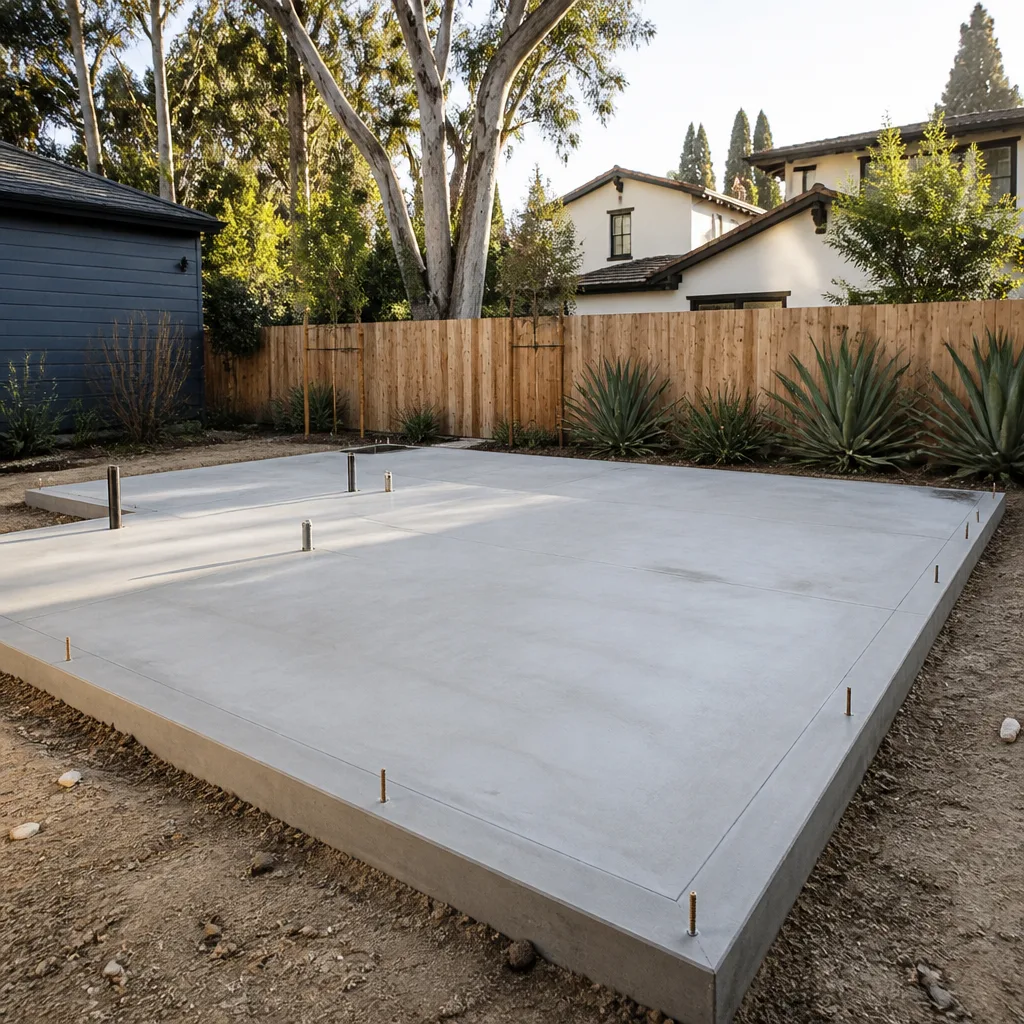
We handle site prep and utilities for every current Tuff Shed line sold in Orange County: the Premier Series, Pro Series, and Ranch Series, plus the older Suncoast and Sundance shells we still see from time to time. The utility requirements don’t change much from the Premier PRO Tall Barn to a Premier Ranch with a porch, but the anchor and base details do shift with the floor system. Sheds with the standard wood floor over a steel frame need level ground and perimeter anchoring. Sheds ordered with the optional reinforced floor for heavy equipment need a flatter, denser base and closer anchor spacing.
When you’re matching anchors and hardware, check the build sheet that came with the shed. It lists the floor width and length in inches, and that’s what tells us which anchor pattern applies. We stock OEM-spec anchors and pressure-treated mudsill material, but we’ll also run Simpson Strong-Tie equivalents when the lot conditions call for a heavier hold-down. The honest split is this: Tuff Shed’s factory anchors are fine for flat, compacted yards. For hillside lots in Orange, Villa Park, or the canyons, we spec aftermarket hold-downs and additional pier blocking because the wind and soil movement demand it.
Signs Your Tuff Shed Site Prep & Utilities Is Failing
- Doors bind or won’t latch without a kick. The base has settled unevenly and the frame is now racked. In Orange County this usually shows up after the first heavy rain cycle, when clay soil in places like Irvine and Lake Forest expands and contracts.
- Floor feels soft or bouncy at the edges. Moisture is getting under the shed because there’s no vapor barrier or the gravel base wasn’t compacted. We see this constantly on sheds dropped straight onto a couple of bags of pea gravel.
- Anchor bolts have pulled loose or the shed has shifted off its blocks. Wrong anchor length for the soil, or no anchors at all. Wind uplift on the back side of a yard facing any Orange County canyon will move a shed a quarter inch at a time until the door frame tells you about it.
- Electrical outlets in the shed are dead or the breaker trips under load. The original feeder was undersized, the conduit wasn’t rated for underground burial, or someone spliced Romex and buried it directly. We open more of these than we’d like in older North County neighborhoods.
- Water pools at the shed corners after rain. The pad wasn’t graded for drainage and the shed is sitting in a low spot. Over time this softens whatever base material is under the floor and invites rot.
One detail that matters: a Tuff Shed floor frame that stays damp for even a season will start to delaminate the bottom course of wall sheathing, and that’s not a $200 anchor fix anymore. We’d rather catch it at the “door sticks” stage.
Replacement Cost & What’s Included
For Orange County, here’s what we quote, written before any work starts:
| Work Scope | Typical Installed Range |
|---|---|
| Re-level existing shed on new compacted gravel base, add/replace anchors | $1,800 – $2,900 |
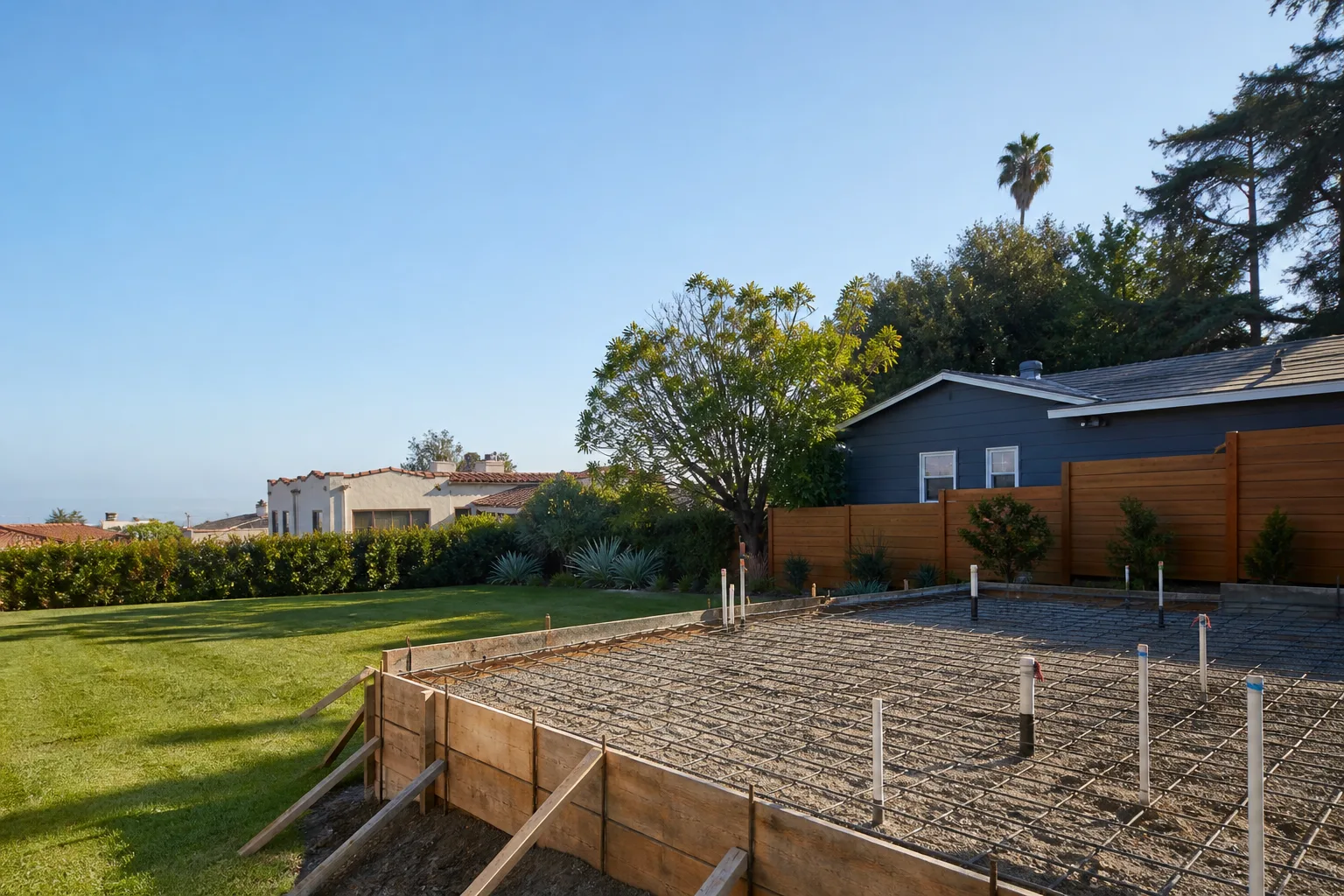
| Full concrete pad (4″ slab, rebar, vapor barrier, perimeter anchors) | $2,800 – $4,700 |
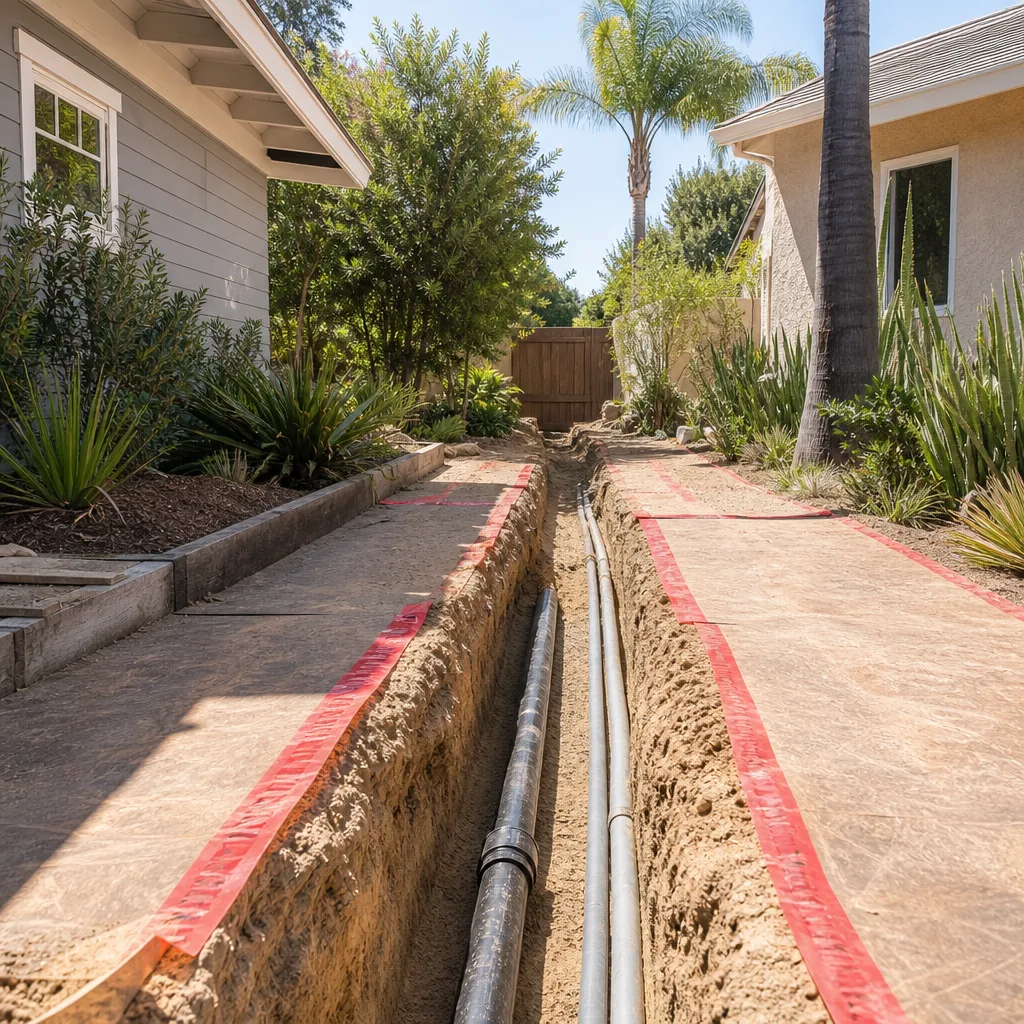
| Electrical stub-out: 20A/30A subpanel, trench, conduit, breakers | $1,400 – $2,800 |
| Full site prep + utility package (pad, anchors, electrical run) | $3,900 – $6,400 |
The range is driven by trench distance from your main panel to the shed, access for a mini-excavator versus hand digging, and whether we’re working around existing hardscape in backyards built before setback rules tightened. Every price includes the parts, labor, and cleanup. The number you approve is the number on the final invoice. We don’t do change orders unless you ask us to add scope.
DIY or Call Us?
What you can safely check yourself: look at the shed corners for gaps, run a level across the floor, and note where water sits after the next rain. That tells you the problem. What you should not do is run your own underground electrical or start re-leveling a shed with a floor jack while it’s fully loaded. If the shed shifts and the jack kicks out, that’s a trip to the hospital, not a weekend project. Underground electrical work in Orange County requires a permit and inspection, and utilities won’t let a homeowner pull some of these permits anyway.
If the base is sound and it’s just a matter of two or three anchors, a handy owner with the right impact wrench can handle that. Anything beyond it, call us at (424) 577-4306 and we’ll give you a written number before we touch the shed.
FAQs
A properly compacted gravel base with a vapor barrier should last 10 to 15 years before you notice any settling; a full concrete pad should outlast the shed itself. The failure point in OC is almost always drainage, not age. Call (424) 577-4306 and we’ll tell you what your specific lot needs.
Yes, in most cases we can lift the shed, regrade and compact the base, reinstall anchors, and set it back down without disassembling anything. If the floor framing has rot from sitting in moisture, we’ll need to sister or replace sections before re-seating. Estimates are free.
A re-level and anchor job is usually one to two working days. A full pad plus electrical can run three to five days including inspection wait time. We’ll put the schedule in writing with the price.
We keep anchors, mudsill, gravel base material, vapor barrier, and the common conduit and breaker sizes on the truck for most Orange County jobs. Oddball sizes we source within a day. We also work with Abodu, Cover, and Dvele prefab platforms, so we’re used to matching hardware to a specific manufacturer’s spec sheet.
Written by Reed Calloway, Owner, Fielding ADU Orange County at Fielding ADU Orange County, serving Orange County and nearby areas.