Last updated October 15, 2026
ADU Cost Breakdown: The Orange County Homeowner’s Reference for 2026
The ADU cost figures most Orange County homeowners see online are technically accurate and practically useless. A range of $150,000 to $400,000 tells you almost nothing about your specific project. After building ADUs across Orange County since 2006, we’ve learned the biggest cost variable sits underground and behind the stucco, not in the finish schedule. This reference breaks down exactly what moves the number, what gets overlooked, and where homeowners in Orange County consistently spend money they didn’t have to. For a broader overview, see our The Complete Guide to ADU in Orange County.
Quick Answer
A 600 sq ft detached ADU in Orange County typically costs $180,000 to $280,000 for a conventional build in 2026, with prefab options running $160,000 to $240,000 before site work. The single most expensive surprise is a utility upgrade discovered after construction starts. An electrical panel replacement runs $3,500 to $8,000, a sewer lateral replacement $8,000 to $20,000, and a fire sprinkler system $8,000 to $15,000 on a detached build.
Table of Contents
- What Actually Drives ADU Cost in Orange County
- Line-Item Cost Structure: 600 Sq Ft Detached ADU
- The Five Utility Upgrade Triggers Nobody Mentions
- Design and Engineering Fees: What’s Fixed, What’s Negotiable
- Permitted vs. Unpermitted: The Resale and Refinancing Math
- What a Fixed-Price Contract Must Spell Out
- Prefab vs. Conventional: The Real Cost Difference in OC
- Common Mistakes to Avoid
- When to Call a Professional
- Frequently Asked Questions
- The Bottom Line
What Actually Drives ADU Cost in Orange County
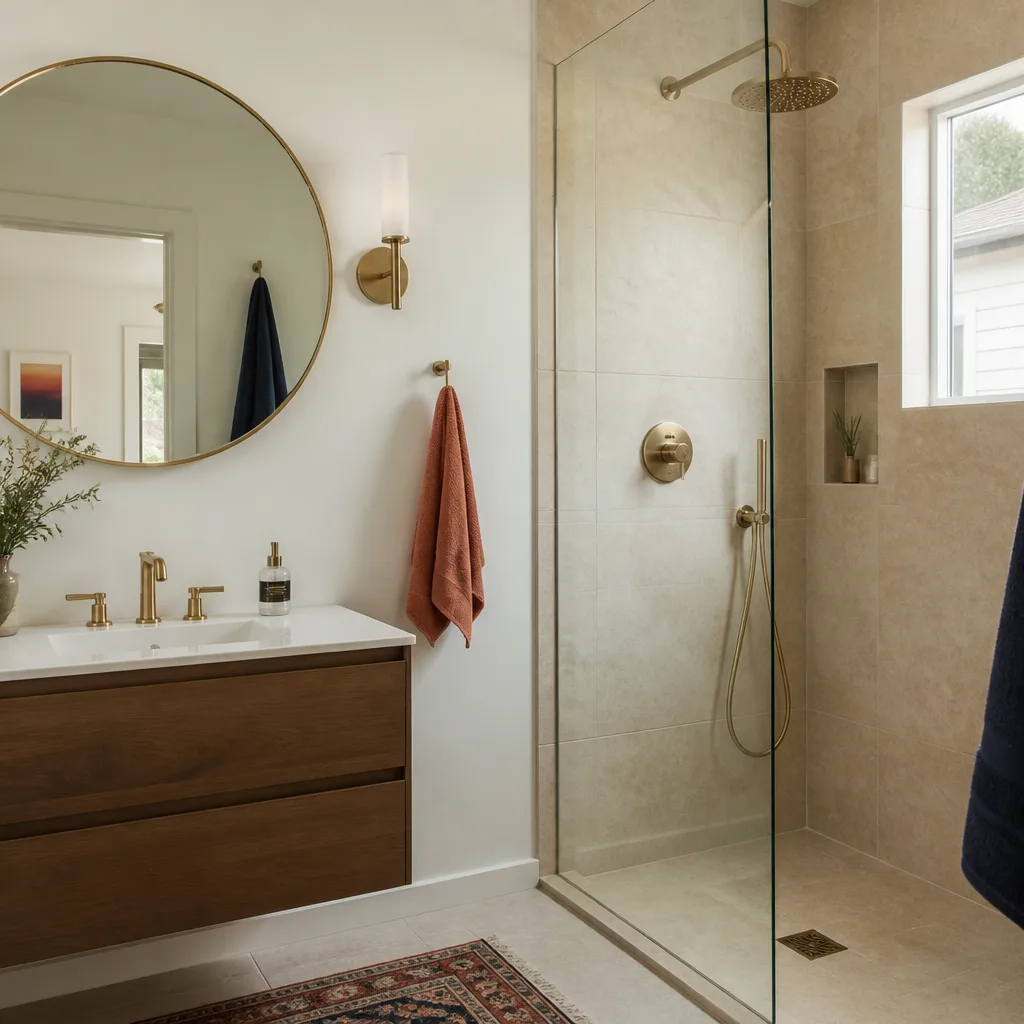
Most Orange County ADU articles open with a cost-per-square-foot figure, usually $300 to $550. That number is a trailing indicator. By the time you see it published, the ADU builders in Orange County who generated those averages have already moved to new pricing. The more useful frame is this: your final number is set by five things, and only two of them are the size and finishes you’re imagining.
The first driver is the condition of your existing utilities. An ADU is not a standalone structure in any practical sense. It borrows electricity from your panel, water from your meter, and drainage from your sewer lateral. If any of those three systems is near capacity, the city will not sign off on your permit until you upgrade it. That upgrade cost lands on your project, not the city’s.
The second driver is your lot. Orange County includes flat lots in Irvine, sloped lots in Laguna Niguel, hillside parcels in Yorba Linda, and compact urban infill in Santa Ana and Fullerton. A slope over 10% adds retaining walls, deeper footings, and a grading plan. A lot without alley access adds a crane day or a longer material carry. These are not hypothetical line items. They are invoice items.
The third driver is build method. A conventional stick-built ADU from a local framing crew costs more in labor than a panelized system like Boxabl or Plant Prefab, but it costs less in site adaptation. A prefab module built in a factory still needs a foundation, utility hookups, and finish work on site. The savings are real, but they are not as large as the factory brochure suggests.
The fourth driver is your city’s specific interpretation of state ADU law. California’s state standards set a floor for what every city must allow, but cities interpret things like setback for detached ADUs, roof height, and parking replacement differently, which is why understanding ADU Permits, Codes & Inspections in CA: What You Need to Know matters before you break ground. A project that sails through Huntington Beach might need a variance conversation in Newport Beach.
The fifth driver, and the one that surprises Orange County homeowners the most, is the permit and impact fee schedule. Some OC cities have reduced or eliminated impact fees for ADUs under 750 sq ft. Others still charge school district fees, sewer connection fees, and plan check fees that can add $10,000 to $20,000 before you’ve bought a single 2×4.
Line-Item Cost Structure: 600 Sq Ft Detached ADU
The following line items reflect what we currently see across Orange County in 2026 for a one-bedroom, one-bath detached ADU on a flat, accessible lot in a mid-range city like Garden Grove, Orange, or Lake Forest. These are not bids. They are ranges based on local labor rates, current material pricing, and standard permit fees in this market.
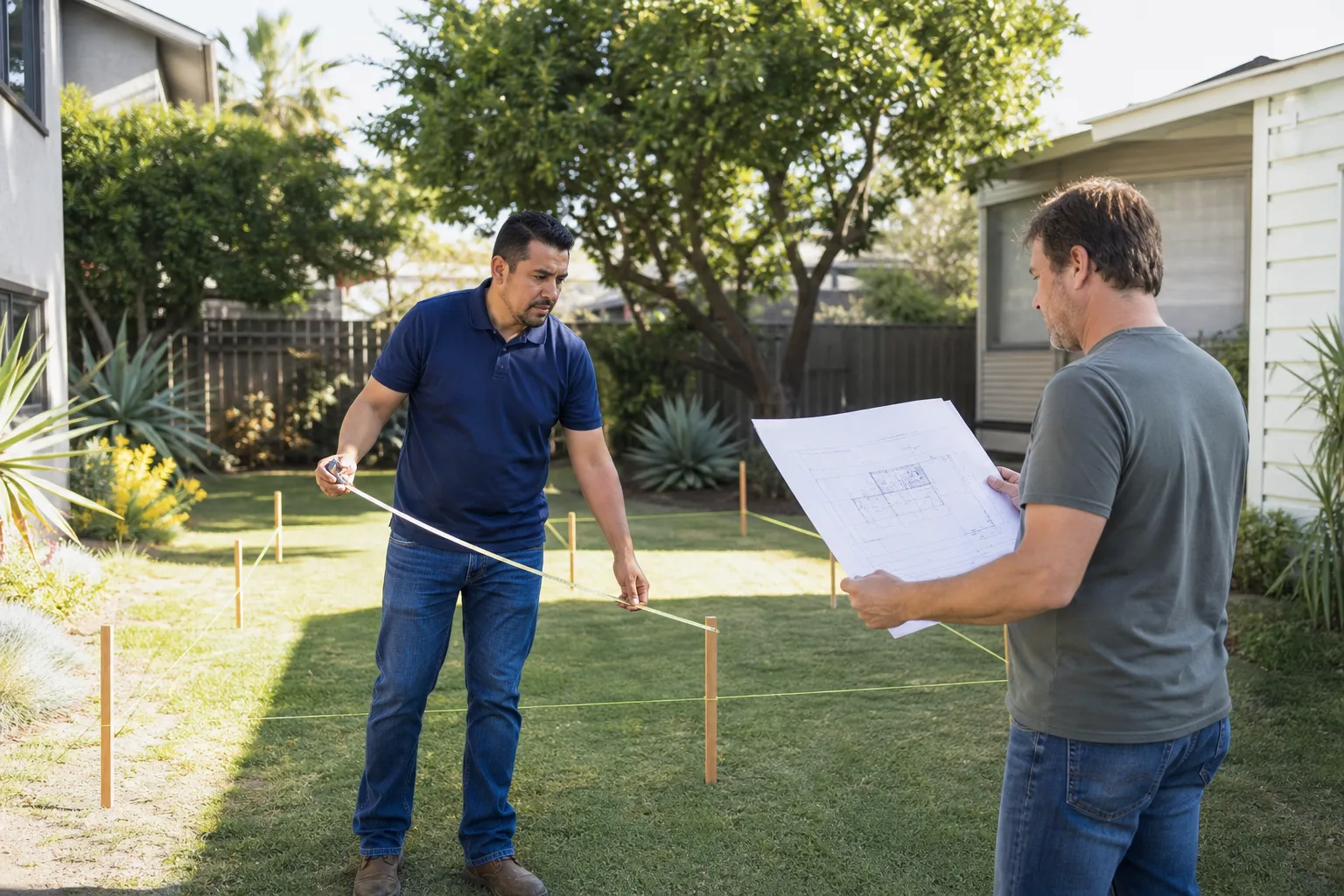
- Site work and layout: $4,000 to $9,000. Includes debris removal, staking, tree root verification, and access preparation.
- Foundation (slab-on-grade): $14,000 to $22,000. Includes excavation, formwork, rebar, concrete, and termite pretreatment.
- Framing (walls, roof, shear): $28,000 to $40,000. Labor-heavy; current Orange County framing rates run $14 to $19 per sq ft for this scope.
- Roofing (comp shingle): $6,000 to $10,000. Includes underlayment, flashing, and tie-in if attached.
- Windows and doors: $7,000 to $12,000. Dual-pane, Title 24 compliant; a slider or French door adds $1,500 to $2,500.
- Plumbing rough-in and finish: $12,000 to $18,000. Includes water, drain, vent, water heater, and one full bath.
- Electrical rough-in and finish: $10,000 to $15,000. Subpanel, wiring, fixtures, and EV-ready 240V circuit if desired.
- HVAC (mini-split): $5,500 to $9,000. One-head system with heat pump; two-head adds $2,500.
- Insulation and drywall: $9,000 to $14,000. Includes sound batt between ADU and main house if attached.
- Interior finishes: $22,000 to $35,000. Flooring, trim, paint, kitchenette cabinets, and countertop.
- Exterior finishes: $8,000 to $14,000. Stucco or James Hardie siding; stucco runs lower, Hardie runs 15 to 20% higher.
- Fire sprinklers (if required): $8,000 to $15,000. Required on detached ADUs per California Residential Code.
- Permit, plan check, and school fees: $8,000 to $18,000. Varies widely by city.
- General conditions and site supervision: $10,000 to $16,000. Porta-potty, temp power, dumpster, project management.
Total range: $151,500 to $228,000 for this baseline. Add a second bedroom, a sloped lot, a sewer lateral replacement, or a panel upgrade, and the number climbs quickly. A second bath adds $18,000 to $28,000. A detached two-car garage conversion is a different animal; if you’re considering that route, read the cost differences on our garage conversion contractor in Orange County page before you decide.
The Five Utility Upgrade Triggers Nobody Mentions
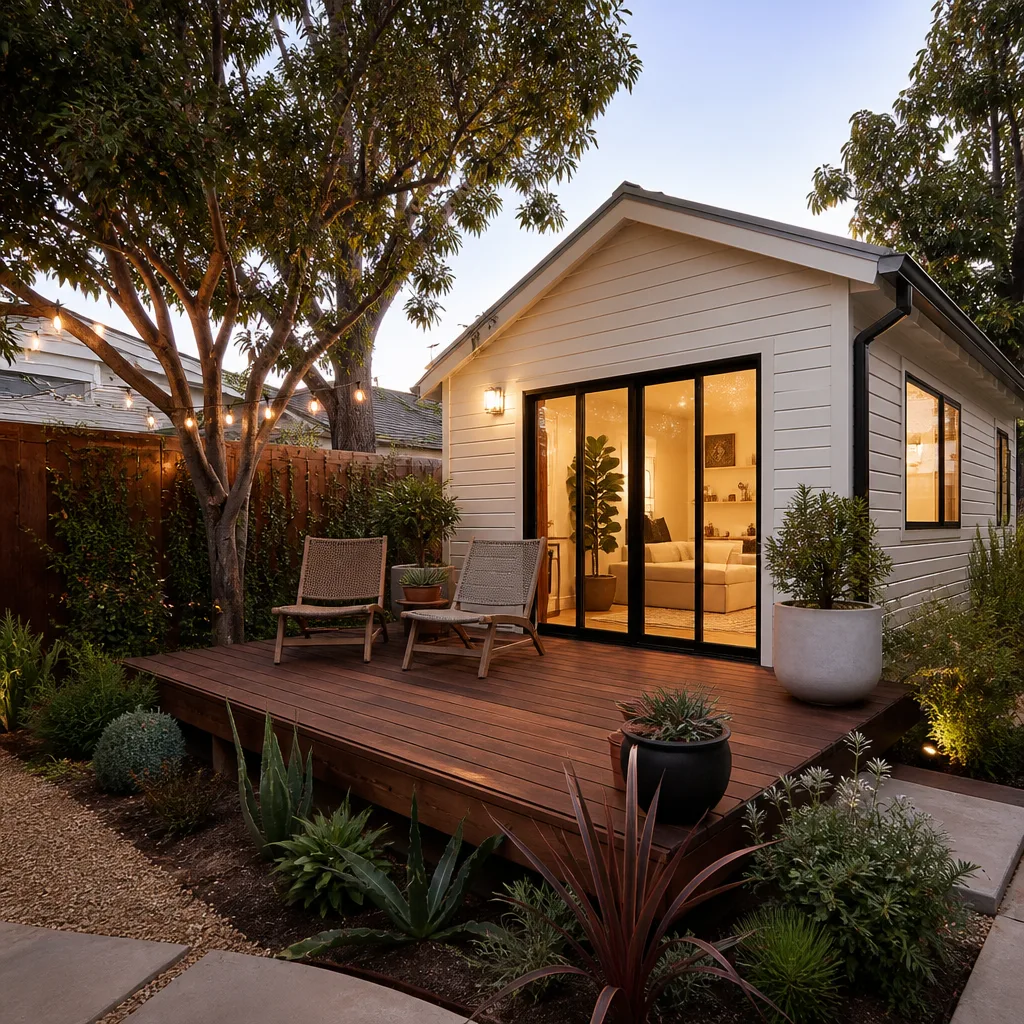
Here is the sequence we see play out across Orange County. A homeowner signs a contract based on a site visit and a bid that assumes the existing panel, sewer, and water service can handle a new 600 sq ft unit. The contractor pulls the permit. The city reviews the plans. The reviewer flags a panel that lacks capacity, a sewer lateral that fails a camera inspection, or a meter that underserves the added demand. Now the owner has three choices: pay the upgrade mid-project, redesign around the limitation, or walk away. None are cheap.
Here are the five triggers and what they cost when discovered late in Orange County specifically.
- Electrical panel capacity. A 100-amp panel cannot legally serve a house and a detached ADU with a kitchen, bath, and HVAC. A 200-amp panel replacement runs $3,500 to $8,000 in OC, including labor, permit, and SCE coordination. If the service drop from the utility is buried rather than overhead, add $2,000 to $4,000 for trenching.
- Sewer lateral condition. Orange County’s older neighborhoods, especially in Fullerton, Anaheim, and parts of Santa Ana, have cast iron or clay laterals that are 60 to 80 years old. A camera inspection before you start costs $250 to $400. A full lateral replacement from the house to the city main runs $8,000 to $20,000, depending on depth and street crossing. Discovery mid-project turns a two-week delay into a two-month one.
- Water meter size. Many OC homes have a 5/8-inch meter. Adding a full ADU with laundry pushes demand past what that meter serves reliably. An upgrade to a 1-inch meter costs $3,000 to $6,000 and requires coordination with the local water district, which has its own timeline.
- Gas line routing. If your ADU includes a gas range, tankless water heater, or gas dryer, the existing line may be undersized. Re-piping from the meter to the new unit runs $1,500 to $4,000, more if the line crosses a patio, driveway, or retaining wall.
- Fire sprinklers. The California Residential Code requires fire sprinklers in detached ADUs. An NFPA 13D system for a 600 sq ft unit runs $8,000 to $15,000. Some cities in Orange County allow a dry-pipe system or a reduced layout, but the requirement itself is non-negotiable on new detached construction.
This is why Fielding ADU Orange County gives every homeowner a written price before any work starts. We walk your panel, meter, and lateral before we write the number, not after. The Garrison Standard, the operating code we’ve followed inside the Garrison Partners family since 2006, means the price on day one is the price on the final invoice. If something fails in that first year, we come back and make it right at no charge.
Design and Engineering Fees: What’s Fixed, What’s Negotiable
Design and engineering is the first place Orange County homeowners spend money and the last place they think to negotiate. It’s also the one cost that scales with complexity, not size. A simple 600 sq ft rectangular ADU has a different fee structure than an L-shaped unit with a zero-lot-line wall and a hillside foundation.
Architectural design for a standard detached ADU in Orange County runs $6,000 to $15,000. Structural engineering adds $3,000 to $7,000. Title 24 energy compliance documentation runs $800 to $1,500. Survey and site plan, when required, runs $1,200 to $2,500. Soil testing, required on sloped lots or sites with expansive soil, runs $1,500 to $3,500.
Here’s what’s negotiable and what’s not. The structural engineering fee is set by the complexity of your lot and your soils; there’s no meaningful discount there. The Title 24 documentation is a flat fee in most OC offices. The architectural design fee, by contrast, has real variance. A designer who has built six ADUs in your specific city knows what the plan checker there will flag. That expertise is worth paying a premium for, because a redesign cycle costs more in time than any fee you could haggle off the front end.
A design-build firm, which does both the drawings and the construction under one contract, folds design into the build price. This is often the least expensive route overall, because the people drawing the plans know exactly what the team will charge to build them. A separate architect and a separate GC can produce a better plan on paper and a worse total cost, because the two parties haven’t looked at each other’s assumptions.
For a room addition contractor in Orange County, the same principle applies to the design fee. Whoever draws the addition should know what the crew will charge to build it.
Permitted vs. Unpermitted: The Resale and Refinancing Math
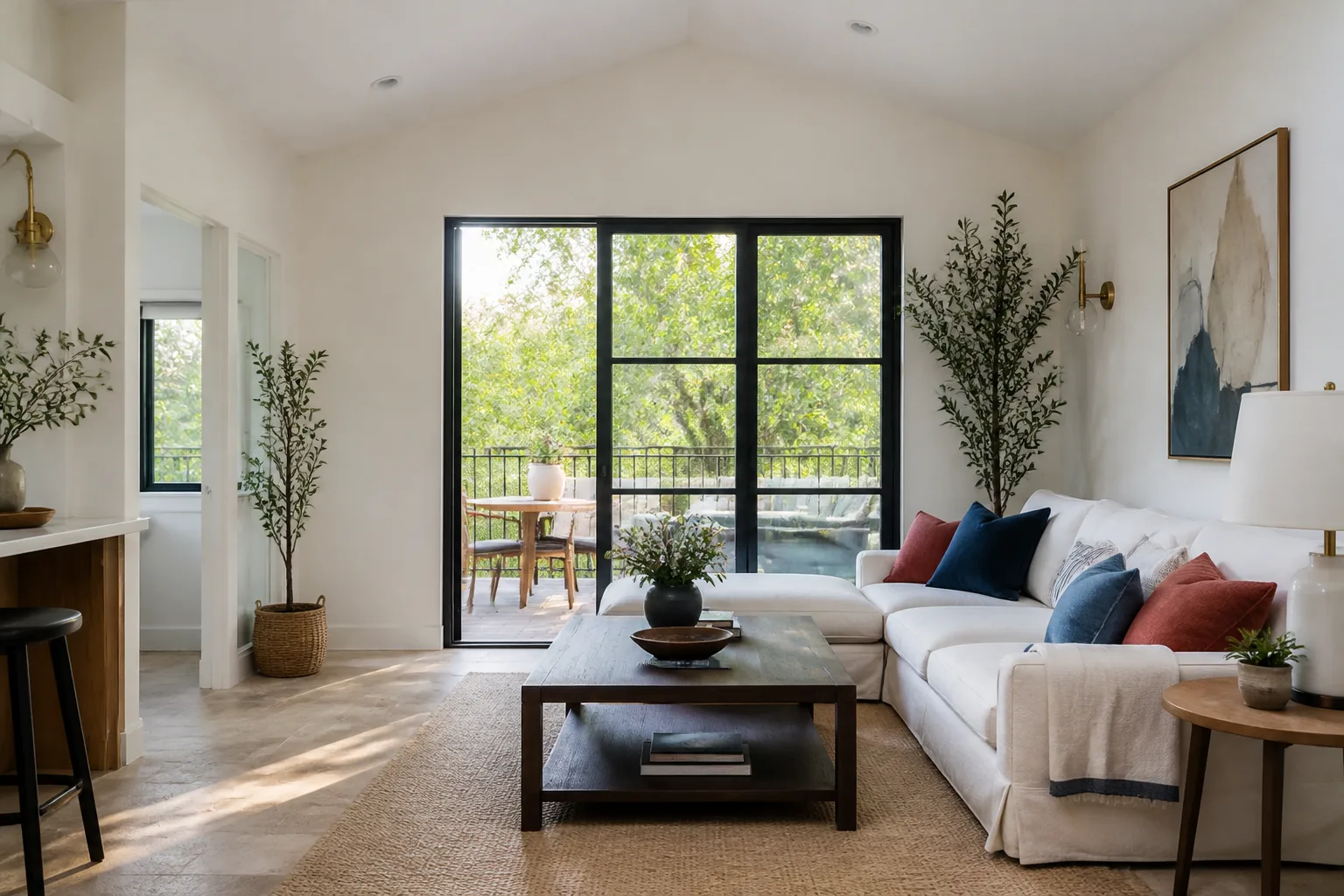
The difference between a permitted ADU and an unpermitted conversion in Orange County is not the $15,000 to $30,000 in permit fees and correction costs. It’s the discount an appraiser applies to a structure the county never signed off on, and the conversation a lender refuses to have when you try to borrow against it.
An unpermitted ADU in Orange County is a liability with a roof. When you sell, the appraiser will not count the square footage as living area. The buyer’s lender will not underwrite the value of a unit that doesn’t appear on the county assessor’s record as legal. In a market as competitive as Orange County’s, a buyer may still pay for the access the unit provides, but not at the $200,000 to $300,000 premium a permitted ADU would command.
Refinancing gets worse. A homeowner who converted a garage to an unpermitted studio in 2019 and now wants to cash out against it will hear the same answer from every lender in the county: the unit doesn’t count. If the assessor flagged the unpermitted work, some lenders will require correction before they’ll touch the loan at all.
Permitted ADUs are handled differently. Orange County assessors do revalue the parcel when a permitted ADU is added, but the added value is typically far less than the cost of construction, and Proposition 13 protects the base value of the original home. A permitted ADU adds income potential that an appraiser can actually use in the income approach section of the report, which is a real number in a rental market where a one-bedroom in Irvine leases for $2,300 to $2,800 a month.
The correction path for an unpermitted unit starts with a code enforcement conversation and ends with a permit and inspection, assuming the work was built to a standard the county will accept. That retrofit permitting process often costs more than the original construction saved, because walls come open and electrical comes out. None of this is a secret. It’s just rarely priced before the fact.
What a Fixed-Price Contract Must Spell Out
Most post-contract price increases in Orange County are not contractor dishonesty. They’re the result of a contract that never defined what “unforeseen conditions” means. The clause is standard. The teeth are in the definitions.
A fixed-price contract should enumerate the following, in writing, before you sign:
- Scope of work per room and per system. Which rooms, which systems, which fixtures. “Up to code” is not a scope. “Full bath: shower, toilet, vanity, exhaust fan, title 24 lighting” is a scope.
- Allowances with dollar caps. Flooring, tile, fixtures, countertops. If the allowance is $8 per sq ft for flooring and the owner picks $12, the delta is a change order, not an unforeseen condition. That’s fair. But the cap must be written.
- Site condition assumptions. Flat lot, accessible by standard equipment, no rock, no debris, no environmental findings. If the site turns out to be sloped or rocky, that’s a legitimate change. If the contract doesn’t state the assumption, the contractor can call flat rock an unforeseen condition after the fact.
- The exclusion list. What’s specifically not in the price: landscaping, fencing, EV charger, window coverings, appliances. If it’s not excluded, the owner can reasonably argue it’s included.
- Change order process. Every change goes on paper with a price before the work changes. Verbal agreement followed by invoice is not a process.
- Payment schedule tied to milestones, not dates. Foundation poured, framing passed inspection, rough-in passed inspection, drywall complete, final inspection passed. If a milestone slips, the payment slips.
- The warranty terms. What’s covered, for how long, and what happens when a claim is made. The Garrison Standard covers workmanship defects for 365 days; if something fails, we come back and make it right at no charge. That is the entire warranty, in one sentence, on paper.
Fielding ADU Orange County writes every contract this way because it’s the only way a homeowner can sign without betting their savings on a contractor’s optimism. Reed Calloway has run Fielding this way since the Garrison Partners family first put its name on a local build in 2006. The price goes in writing before the work starts. The crew is background-checked and uniformed. The phone is answered by a live person at (424) 577-4306, day or night.
Prefab vs. Conventional: The Real Cost Difference in OC
Orange County homeowners researching ADUs in 2026 are almost certainly looking at prefab platforms before they call a local builder. That’s the right instinct. A factory-built unit from Dvele, Mighty Buildings, or Plant Prefab can reduce on-site framing time from weeks to days and eliminate most weather-related delays. The question is whether the savings survive contact with an Orange County building department.
Here’s the honest math. A 600 sq ft prefab ADU from a platform like Plant Prefab or Dvele costs $140,000 to $220,000 for the module itself. Site work, foundation, utility hookups, and finish installation add $60,000 to $100,000. Total: $200,000 to $320,000, which is comparable to, and sometimes higher than, a conventional build for the same scope in Orange County.
The savings come from speed and predictability, not sticker price. A prefab unit that ships in eight weeks and installs in three days avoids three to six months of on-site framing labor. For a homeowner who loses rental income every month construction runs, that speed is worth real money. If the unit rents for $2,500 a month and prefab saves four months of construction time, the homeowner recovers $10,000 of the premium before the first tenant’s lease expires.
The other variable is city review. Prefab systems are pre-approved by the state, but each Orange County city still runs its own structural review of the site-specific foundation and utility connection. Some cities have seen many Mighty Buildings units and process them quickly. Others treat a factory-built module as a curiosity and slow-walk the plan check. Ask your builder which cities they’ve placed a prefab unit in before, and in which one specifically.
We work with major platforms including Dvele, Mighty Buildings, Boxabl, and Plant Prefab, alongside conventional construction with James Hardie siding. That’s not a sales pitch for prefab or against it. It’s an acknowledgment that the right build method depends on your lot, your city, and your timeline.
Common Mistakes to Avoid
- Signing before the panel is checked. A 100-amp panel serves the house and nothing else. Confirm capacity before the contract, not after the permit application. A $300 electrical evaluation beats an $8,000 panel replacement discovered mid-project.
- Buying land-prep bliss without a sewer camera. A $300 camera inspection of the lateral before you break ground tells you whether you’re building on an $8,000 connection or a $20,000 pipe replacement.
- Assuming the city will waive the fire sprinkler requirement. California state code requires sprinklers on detached ADUs. Orange County cities do not waive state fire code.
- Budgeting at the national average cost per sq ft. Orange County labor rates are 20 to 30% above the national average for framing, plumbing, and electrical. Use OC numbers, not the figure from a national blog.
- Treating the “unforeseen conditions” clause as boilerplate. It is the single most-used mechanism for post-contract price increases in Orange County. Define it in writing or pay it on the invoice.
- Skipping the permit to save $15,000. You’ll spend more than that correcting the unit before sale, and the lost appraised value is five to ten times the permit fee.
- Picking a contractor by bid alone. The lowest bid in Orange County is usually low because it excludes the utility work the city will require. A written price from a builder who checked the utilities beats a lower written price from one who didn’t.
When to Call a Professional
Call a professional the day you start thinking about an ADU, not after you’ve bought plans. Orange County cities each have their own interpretation of state ADU law, and a builder who has navigated your specific city’s plan check will save you months. If you have a sloped lot, an older electrical panel, a sewer lateral in a 1960s neighborhood, or a HOA covenant that may restrict detached units, call before you pay for design. Fielding ADU Orange County home offers free estimates across Orange County. Call (424) 577-4306 and a live person answers, day or night.
Frequently Asked Questions
A 600 sq ft detached ADU in Orange County costs $180,000 to $280,000 for a conventional build and $200,000 to $320,000 for a prefab unit including site work, foundation, and utility hookups. Utility upgrades add $15,000 to $40,000 if your panel, meter, or sewer lateral needs replacement. Call (424) 577-4306 for a free estimate based on your lot and existing services.
An undersized electrical panel or a failing sewer lateral adds the most unexpected cost. A panel upgrade runs $3,500 to $8,000 and a lateral replacement $8,000 to $20,000. Both are discovered during plan check or construction if they were not inspected before the contract was written. Fielding ADU Orange County checks both before giving you a written price.
Yes. Every ADU in Orange County, including garage conversions and prefab units, requires city permits and inspections. An unpermitted unit cannot be counted as living area by an appraiser and will complicate a sale or refinance. The permit fee range for a 600 sq ft detached ADU in OC is typically $8,000 to $18,000.
A conventional detached ADU in Orange County takes 7 to 11 months from design to final inspection. A prefab unit can reduce on-site construction time to 3 to 5 months after the foundation and utilities are complete. The city plan check phase is the biggest variable, running 4 to 12 weeks depending on the city.
Not usually. The module cost from platforms like Dvele, Mighty Buildings, or Plant Prefab is comparable to conventional construction once site work and utility hookups are included. The savings come from speed and schedule certainty, not sticker price. The right choice depends on your lot, your city, and your timeline.
Not if your contract defines scope, allowances, exclusions, and unforeseen conditions in writing. Change orders are legitimate when the scope changes or the site condition differs from what was stated. They are not legitimate when they appear as vague “unforeseen conditions” after the fact. Fielding ADU Orange County puts the full price in writing before any work starts and stands behind that number.
The Bottom Line
The most useful thing you can do before budgeting an Orange County ADU is check the utilities. For more guides & resources on planning your project, explore our blog. That one $550 inspection, combining a panel review and a sewer camera, tells you more about your final cost than any square-footage formula. From there, get a written price that defines the scope, the allowances, the exclusions, and the warranty. The Garrison Standard at Fielding ADU Orange County means exactly that: price in writing, crew background-checked and uniformed, work done by the book, and a 365-day written guarantee that brings us back at no charge if something fails. Call (424) 577-4306 for a free estimate.
Written by Reed Calloway, Owner at Fielding ADU Orange County, serving Orange County since 2006.